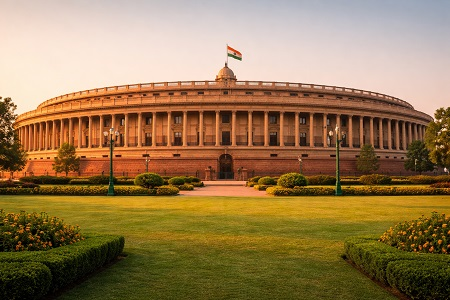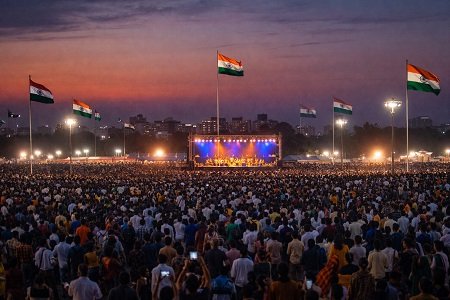
Bihar observed its 114th Foundation Day on March 22, 2026. The date marks 114 years since the British colonial government separated Bihar from the Bengal Presidency — an administrative act that took effect on March 22, 1912, and gave the region its own distinct provincial identity for the first time. The day is now a state public holiday, and this year it was marked by a three-day programme running from March 22 to 24 at Gandhi Maidan in Patna, with parallel events at S K Memorial Hall and Rabindra Bhawan.
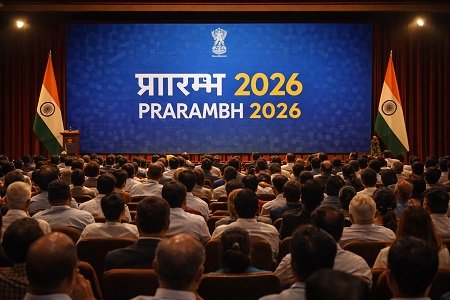
The theme for Bihar Diwas 2026 is “Unnat Bihar, Ujjwal Bihar” — which translates as Advanced Bihar, Bright Bihar. Chief Minister Nitish Kumar inaugurated the state-level celebrations at Gandhi Maidan. Greetings came from the country’s highest offices: President Droupadi Murmu, Prime Minister Narendra Modi, Union Home Minister Amit Shah, and others posted formal messages on March 22 acknowledging Bihar’s history and its place in India’s development.
What Happened on March 22, 1912
Before 1912, Bihar had no separate administrative existence. It was part of the Bengal Presidency — the largest and most unwieldy administrative unit in British India, covering a vast stretch that included present-day West Bengal, Bangladesh, Bihar, Jharkhand, and Odisha. The presidency was difficult to govern from a single centre, and Bihar’s distinct language, culture, and economic character had long made it an awkward fit within that larger structure.
The trigger for reorganisation came from an earlier political crisis. In 1905, Lord Curzon partitioned Bengal into two — an administrative move that sparked the Swadeshi movement and widespread political agitation across India. The partition was deeply unpopular and was reversed in 1911. But the reversal itself required a reorganisation of the Bengal Presidency’s boundaries, and that created the opening for Bihar.
On March 21, 1912, Thomas Gibson Carmichael, the new Governor of Bengal, took charge and declared that from the following day — March 22 — the Bengal Presidency would be divided into four administrative units: Bengal, Orissa, Bihar, and Assam. Bihar and Orissa were initially combined as the Province of Bihar and Orissa, with Patna as its capital. They remained joined until 1936, when they were separated into two distinct provinces. Bihar continued as a state after Independence in 1947, and in 2000, Jharkhand was carved out of it, again reshaping its boundaries. That 2000 division is still a sore point in some quarters of Bihar politics — the state lost both mineral-rich land and tribal population when Jharkhand was formed.
Why the Name Bihar
The name Bihar is derived from the Sanskrit and Pali word Vihara, meaning a Buddhist monastery. The region was once dotted with Buddhist monasteries and learning centres — Nalanda being the most well known, a university that functioned from the 5th to the 13th century and drew scholars from as far as China, Korea, and Central Asia. The name Vihara, over centuries of spoken use, became Bihar.
That etymology matters because it connects Bihar’s administrative identity to something much older than 1912. The name predates the province, predates the Presidency, and predates the Mughal empire that controlled the region before British rule. It goes back to the period when the Gangetic plain was the centre of Buddhist intellectual life in the world.
Bihar’s Place in Ancient History
President Droupadi Murmu, in her Bihar Diwas message, described Bihar as “the land of the world’s first republic.” That is a reference to the Vajjian Confederacy — a federation of clans, including the Licchavis, that governed the region around Vaishali roughly 2,500 years ago. Historians debate how accurately the modern term “republic” maps onto the Vajjian system, but the tradition of consultative governance in that region predates Athens by decades, and Vaishali is consistently cited in that context.
Beyond that, Bihar’s historical record includes Magadha — one of the most powerful empires of the ancient world, from which Chandragupta Maurya launched the Mauryan Empire in the 4th century BCE. Ashoka, Chandragupta’s grandson, ruled from Pataliputra — present-day Patna — and his edicts, carved on rock and pillar across the subcontinent, remain the earliest surviving written records of governance in India. Chanakya, the political philosopher behind the Arthashastra, was associated with the Mauryan court. Mahavira, the 24th Tirthankara of Jainism, was born in Vaishali. Gautama Buddha attained enlightenment at Bodh Gaya, in what is now Gaya district, Bihar. The concentration of history in this one region is, by any measure, extraordinary.
The 2026 Celebrations at Gandhi Maidan
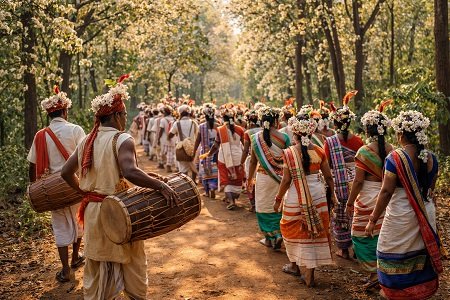
The three-day programme at Gandhi Maidan this year included cultural performances, classical music, folk art, and a laser light show. Singers Sona Mohapatra, Shaan, and Papon were scheduled to perform. Dhrupad and Gharana classical recitals were part of the programme, alongside folk theatre in the tradition of Bhikhari Thakur — the 19th and 20th century playwright known as the Shakespeare of Bhojpuri. A Hasya Kavi Sammelan, a gathering of satirical and comic poets, was also on the schedule.
The district administration deployed 94 magistrates across the venue and installed 128 CCTV cameras. A 24-hour control room was operational throughout the event, supported by medical teams and fire services. Entry routes and parking were designated in advance to manage the volume of people expected across three days at Gandhi Maidan, which is Patna’s largest open public ground.
Bihar Diwas celebrations were also held outside India. The Bihari diaspora observes the day in Australia, Canada, the United Arab Emirates, Mauritius, Britain, and Trinidad, typically through cultural events, traditional music, and food. The reach of those overseas celebrations is a measure of how large the Bihari migration has been over the past century — driven first by indentured labour under British rule, and more recently by economic migration both within India and internationally.
Bihar Diwas as an Official Annual Event — A Relatively Recent Tradition
The state-level celebrations now associated with Bihar Diwas are not as old as the day itself. Large-scale official celebrations began in 2010, during CM Nitish Kumar’s tenure, as a deliberate effort to rebuild state pride and cultural identity. Bihar had for decades carried a reputation — partly deserved, partly caricatured — for poverty, crime, and political dysfunction. The annual Bihar Diwas event was in part a political project: to remind Biharis, and the rest of India, that this was the same land that produced Chanakya, Ashoka, and the Nalanda university.
Whether the event has shifted perceptions is difficult to measure. What is measurable is that it now draws national attention on March 22 every year, pulls in participation from the highest constitutional offices, and is celebrated by Biharis across the world. That is a different kind of visibility from what the state had fifteen years ago.
Bihar Today: 38 Districts, 9 Divisions, and Ongoing Challenges
Bihar today has 38 districts and 9 administrative divisions. It shares borders with West Bengal to the east, Uttar Pradesh to the west, Jharkhand to the south, and Nepal to the north. Patna remains the capital. The state’s population is among the youngest in India — Bihar has one of the highest fertility rates of any large state, meaning a significant proportion of its population is under 25.
The brain drain is real and openly discussed. A comment from a reader on one of the Bihar Diwas news stories this year captured it plainly: “As a Bihari working in Bangalore, I see the brain drain firsthand. Hope the golden future includes more job opportunities and better infrastructure back home.” That sentiment is widely shared. Bihar’s economic output remains below the national per-capita average despite consistent growth rates in recent years. The migration of skilled labour out of the state — to Delhi, Mumbai, Bangalore, and abroad — is one of the defining economic realities of modern Bihar, and it comes up every year on Bihar Diwas alongside the historical pride and the cultural celebrations.
March 22, Every Year
Bihar Diwas is now a fixed point in the Indian calendar — the one day a year when the state’s history, from Magadha to Nalanda to 1912 to the present, gets a sustained public hearing. The 114th Foundation Day brought three days of events, national greetings, and a packed Gandhi Maidan. The 115th will come around on March 22, 2027, and the same questions — about jobs, about migration, about what Unnat Bihar actually looks like on the ground — will still be part of the conversation.
 celebritiesbuzz